Kin
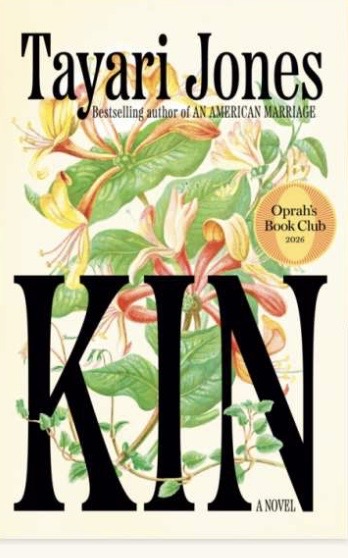
Kin is one of those novels whose characters are more interesting than its plot. And that's not a backhanded compliment. At least, coming from me.
Plots are overrated. They come and go--easily forgotten. But great characters live forever.
And the characters Tayari Jones created in Kin will last cause they are fantabulous.
They’re one of a kind. And by that I mean two contradictory things at once—there’s no one quite like them and they instantly remind me of a dozen other characters I've met over the years.
There are the two narrators--Venice (aka, Niecey) and Annie. Motherless girls from Honesuckle, a small town in Louisiana. Raised by aunts and grandmothers who did the best they could with a task they never requested. Something they never tire of mentioning. As in...
I didn't ask to have to change your diapers. Or make your meals. Or put that roof over your head. And so on…
And the whole time I'm reading their comments, I'm thinking--Tayari Jones, I know the type.
The story is set in the Jim Crow south--Louisiana, Tennessee and Georgia in the ‘50s and ‘60s.
The main characters are Black people--white people are generally in the distance. Mercifully. Cause they're nothing but trouble— white people, that is. And the further you stay from them, the better off you'll be.
Like the bus driver who confronts Niecey as she accidentally sits in the last row of the white-only section that she'd thought was actually the first row of the back-of-the-bus section.
Then there's this strange white guy who's passing as a Black man. While reserving the right to slip back into the white world when it's convenient.
I've known several people like that, too.
Early in the story, Niecey and Annie go their separate ways. Niecey to college life in Atlanta. Annie to a honky-tonk existence in Memphis, where they continue to meet fascinating people.
Like Lulabelle, the madame who runs a whorehouse in the backwoods of Mississippi. And Mary, the I-got-an-opinion-about-absolutely-everything debutante who controls the first-floor dormitory bedroom through which co-eds sneak back in after a night on the town.
And Bobo, the chatty jazz man, who will use five words, when one will do.
And on and on it goes, every chapter bringing you someone you should know. To quote Harry Porterfield.
And everyone--and I mean, everyone--has got to know everyone else's business. So when one character moves up her wedding day, no one believes she did it cause she just couldn't wait to get married. No, suddenly everyone in Atlanta seems to know for a fact, even though they don't know the facts, that she musta got knocked up. And they can't stop yapping about it, when she's not around. And sometimes when she is.
Oh, man, do I know that type.
In short…
If you like colorful characters and captivating dialogue, read Kin now.
A Friend Of Kafka



 RSS Feed