World Pacific
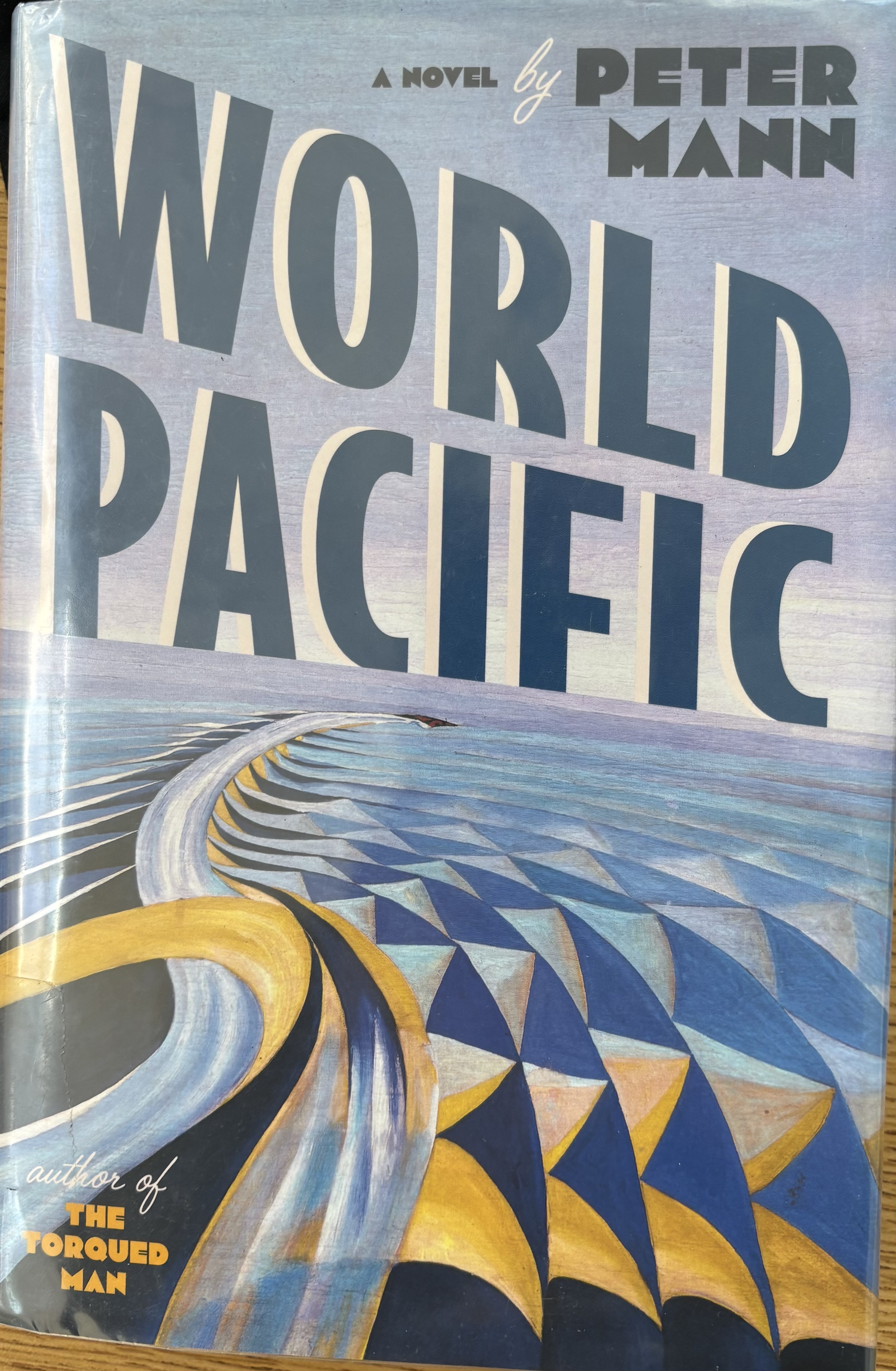
I finished World Pacific--Peter Mann's latest novel--in a glorious burst of reading at 8 in the morning, having been up almost all night. Couldn't sleep--just had to keep reading.
And when I closed the book, I thought...
What was that all about? Why could I not put the book down? It was after all, a little disappointing.
That is--I started reading expecting one thing, and got something else.
The blurbs and the reviews promised me more of The Torqued Man, Mann's last novel--a riveting World War II spy caper filled with characters who, for all of their complexities, were, more or less good people fighting a good fight against evil.
Great read. I urge you to check it out.
But World Pacific?
The heroes were also villains. No cause seemed noble. It was filled with moral ambiguities. Everybody in it for themselves. As the fascists inched closer to taking over the world.
Plus, the plot was tedious. I lost track after awhile--then I quit trying to keep track. And, yet, on I read, even though there were plenty of other books piled on my coffee table, practically begging me to pick them up.
Why did I keep at it? Not cause I felt a need to finish a book I start. As I've already told you--I feel no such obligation. This is not high school English. There's no test to take. I get no grade. I'm reading strictly for the love of reading.
Something was tugging me towards the book.
It had to do with the narrative voice—one of them anyway. There are three voices who tell the story--one more compelling than the others. In my opinion.
That wold be Richard "Dickie" Halifax, the toxically charming rouge who's at the center of the bewildering plot.
Dickie races around the world, from one derring-do adventure to another. He's got an acerbic voice, dedicated to the proposition that selfishness is the key to survival. And selflessness is a game for suckers who will probably wind up at the bottom of the ocean. Or splattered on the sidewalk. Or face down in the mud. Just to name a few of the things that happen to his friends.

Admit it, Peter Mann—you were channeling Silence of the Lambs…
For all his awfulness, I found his narrative voice compelling. Like in this extended riff about a few days stuck on the Farallons, a rocky island outside of San Francisco. Take it away, Dickie...
"I had expected to be stuck for only a couple of days on the Farallons, which is a generous, romantic-sounding-name for a heap of wet rocks in the frigid crosswinds of the Pacific. And lest you think it's peaceful refuge suitable for spiritual reflection, like some marine hermitage or floating Walden, know that it reeks of seal shit and is livid with the unceasing screams of gulls, cormorants, and some wretched waddling fowl that looks like a penguin's imbecilic cousin."
There's more, but I should move on. Oh, indulge me two last sentences...
"There's not a dry patch anywhere to be found. And some of those seals, especially the ones with a big old dingus on their face, are downright mean."
The image of the seal with the "big old dingus on their face" had me laughing around the time the sun was coming up.
As the day wore on, I eventually concluded that World Pacific is really not a spy caper at all. More like a cry for help. The story of one man who did something so horrific at an early age that the rest of his life is an attempt to out run the guilt that consumes him. To laugh at it. To dismiss it cavalierly. To pretend it doesn't exist.
Oh, let Dickie explain...
"No amount of living can wash away that stain, boys. In fact, I think all you can do is keep reliving it, drawing concentric circles round that same black hole. Just like the vortex that sucked down [a ship lost at sea]. Yessir, the Japanese know their stuff when they talk about giri, the debt that never can be repaid."
So, yes, the book's a triumph--tedious plot and all. Bigger than a spy caper--more universal. We all have our secrets. Most far less corrosive than Dickie's, that's true. But if we don't watch out, they'll consume us like his consumed him.
All in all--World Pacific is less a spy novel than a horror story. Like Silence of the Lambs, in more than ways than one.
Read it at your own risk.

Big & Fast