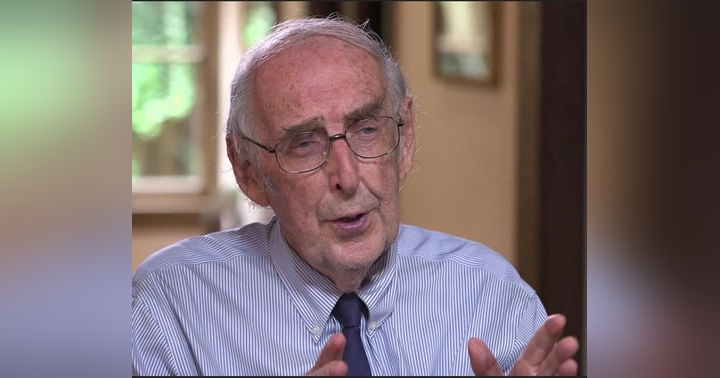
Until The Last Gun Is Silent
There's a tiny street in Michigan--near a VA hospital in Battle Creek--named for Dwight "Skip" Johnson.
I think I'll go there one day. To pay my respects to a good man killed by his country.
Not literally. In actuality, Johnson was shot dead by a store owner in Detroit, whose store Johnson was robbing.
When Johnson pulled his gun, the store owner pulled his pistol. As far as he was concerned, it was shoot or be shot. Hard to argue with that.
But the path that led Johnson to that stickup is one his country laid out--no doubt about that.
The story's told by Matthew Delmont, an historian at Dartmouth, in Until The Last Gun Is Silent, a haunting book I can't recommend enough.
It's more or less about the Vietnam War's impact on Black Americans. There are two main characters--Coretta Scott King and Dwight Johnson.
Coretta Scott King is, of course, Martin Luther King Jr's widow. But until I read Delmont's book, I didn't appreciate her importance as a lifelong anti-war crusader.
In her own right, independent of her famous husband, Coretta crossed the country, leading protests against not just the Vietnam War. But all wars. And calling for eliminating nuclear arms and diverting money spent on weapons to housing, education, health care and so forth.
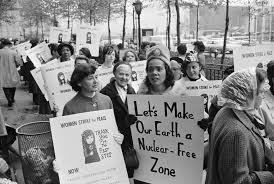
Coretta Scott-King was on the front lines for peace...
On matters of peace, Coretta was ahead of her husband, who rightly believed that strongly opposing the war in Vietnam would undercut the civil rights movement.
Unfortunately, history proved him correct. When he decided he could remain silent no more, King openly joined the anti-war movement with a powerful speech at Riverside Church in New York City.
The opposition and hate he received for that speech was overwhelming. Almost a year later, King was shot dead in Memphis. With each passing year, I become more convinced that the connection between those two things--King's open opposition to the war and his murder--were not coincidental.
He paid the ultimate price. As did Dwight Johnson...
Born in 1947 and raised in Detroit, Johnson got drafted soon after he graduated from high school--no college deferment for him. And was sent to Vietnam to serve as a tank driver.
On January 15, 1968--coincidentally, Martin Luther King's 39th birthday--Johnson's squad was ambushed by North Vietnamese soldiers on a highway near Dak To.
A ferocious battle followed--in which Johnson showed remarkable bravery, fending off the enemy with only a pistol, and saving several lives.
For his courage, Johnson was awarded the Medal of Honor, in a White House ceremony conducted by President Lyndon Johnson, who said...
"I would rather be able to have that blue band around my neck for the Congressional Medal of Honor than to be the President of the United States."
You tell me, if you think President Johnson was telling the truth.
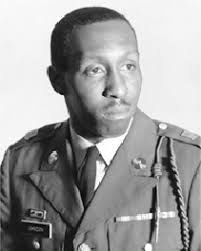
And Dwight Johnson was sent off to fight a war.
Not knowing what else to do with his life, Dwight Johnson became an army recruiter. Traveling around Detroit, trying to convince high-school kids (just a few years younger than he was) to enlist and head off to fight in the same war that had almost killed him.
He was, whether he realized it or not, part of a wider effort, called Project 100,000, which may be the most cynical operation of that era.
Under the guise of giving Black teenagers an opportunity to better themselves, the feds dedicated themselves to "a sweeping initiative to induct one hundred thousand men into the military each year--most of whom had previously failed the Armed Forces Qualification Tests," Delmont writes.
The "brains" behind Project 100,000 was Robert McNamara, the secretary of defense, who framed it as an "extension of President Johnson's War on Poverty."
McNamara declared that thousands of men from "poverty-encrusted" backgrounds would be "salvaged" for military duty. It would "rehabilitate the nation's subterranean poor" and "cure them of the idleness, ignorance and apathy" that defined their lives."
Here's a direct quote from McNamara...
"The poor of America...can be given an opportunity to serve in their country's defense...and they can be given an opportunity to return to civilian life with skills and aptitudes which for them and their families will reverse the downward spiral of human decay."
Like I said--doesn't get more cynical than that.
The program certainly didn't work that way for Dwight Johnson, who was haunted by memories of battle. And tortured by guilt for his part in sending kids to a senseless war. And tormented by the realization he was being used by powerful people who didn't care about him or his family--and who certainly weren't offering him any of the opportunities McNamara had promised.
Johnson drank too much. Fell behind on his debts. And in an act of insanity and desperation, headed into that neighborhood store, pistol in hand. It was April 29, 1971. Johnson was 23-years-old. As his mother put it...
"Sometimes I wonder if Skip was tired of this life and needed someone else to pull the trigger."
A couple of years after Dwight Johnson's death, President Richard Nixon launched a new war--the War on Drugs.
In which thousands of Black men were incarcerated for taking or selling drugs--things many white people got away with. No war for them.
So much for McNamara's promise.
Delmont explores it all--does not run away from making the challenging connections and correlations.
In retrospect, Coretta Scott was a great American hero, and guys like Skip Johnson never had a chance.
A postscript...
For years and years, I've been hearing white people rail against affirmative action, complaining it gives Black people an unfair advantage in things like the scramble for coveted seats in the country's top universities.
They call it "reverse racism" and their complaint's are taken very seriously. Eventually, Republicans built a movement against it--helping catapult a lunatic to the White House. Where he decreed an executive ordering banning affirmative action (now called DEI). You can't even talk about it if you're a college professor at some schools in MAGA land--or they'll fire you.
And not once in all the years of hearing white people crying about reverse racism have I ever hear one of them mention McNamara's Project 100,000--a most malicious bastardization of affirmative action.
Never heard them complain about the "preferential treatment" Black people, like Dwight Johnson, got as the feds dispatched them to face bullets and bombs in Vietnam.
For that matter, never heard them complain about the favorable treatment they received in staying out of prison during the endless war on drugs.
Funny how that works...
Mayor Z's St. Patrick's Day Speech