April In Spain
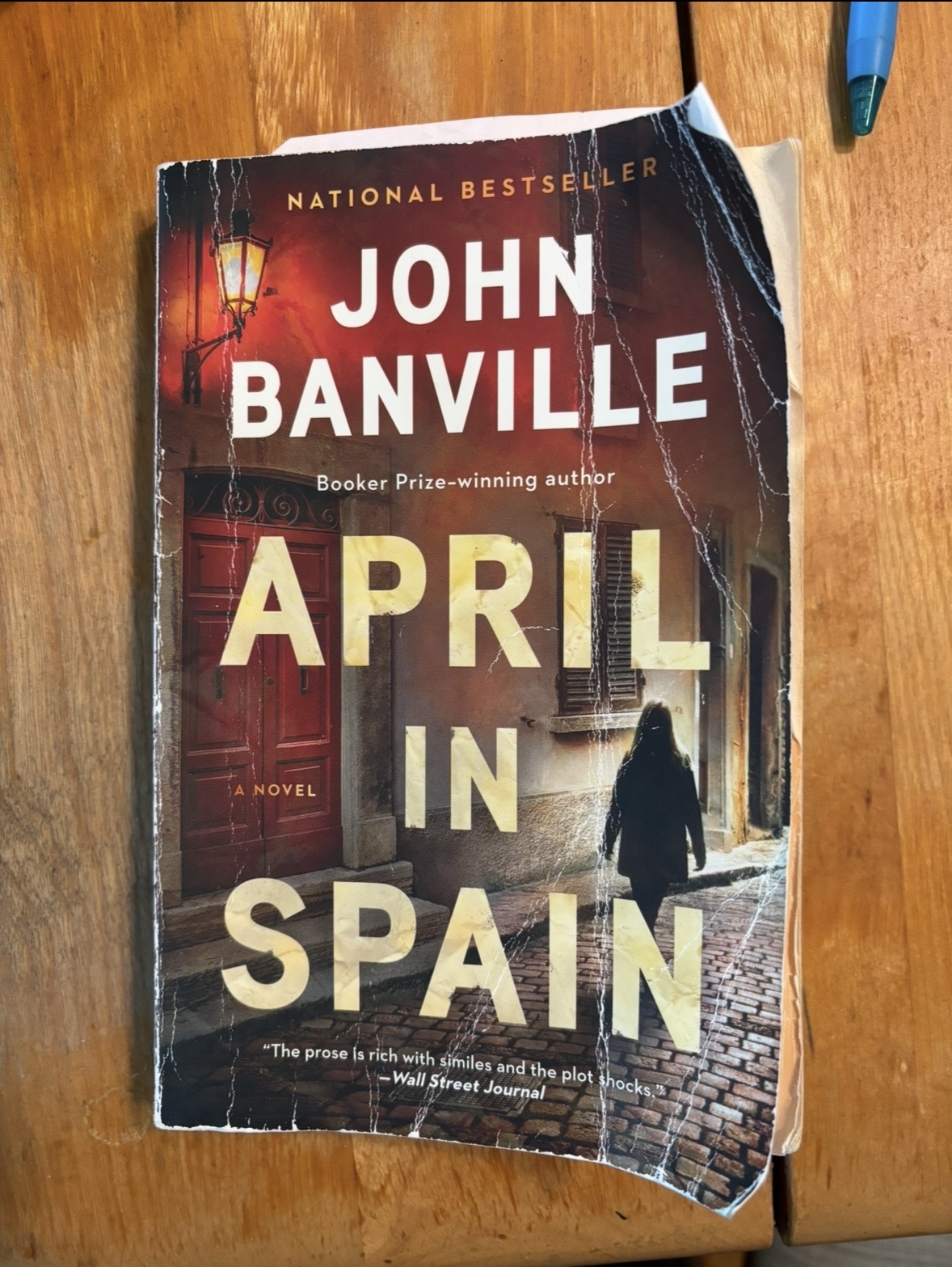
Took me awhile to find my way to John Banville, the great Irish novelist. But find him I did, and now I’m hooked.
In the last two months, I've read three of his novels and got a fourth on the way, on order from the library. It’s like fried chicken—once I get started, can’t put ‘em down.
Why did it take me so long to find Banville? Blame Blanville. He's his own worst enemy. For years, he divided his novels into categories of serious and middlebrow.
The serious ones won him comparisons to Joyce and Proust and maybe I was intimidated.
The latter were detective novels he wrote under a pseudonym like he was ashamed of them. He cranked them out like it was no big deal and displayed a touch of disdain for anyone who liked them.
And then--the story goes--he re-read one of them and said: Hey, not bad for a detective story. And with that, he put the Banville name on them, like they were his real children and not some mangy orphans.
So anyway, the first one I read was April in Spain, a murder mystery that’s way more than murder mystery. If you get my drift…
And within a page or two I knew—this man’s in charge. The writing grabbed me. Couldn’t put that book down.
First thing I noticed is his vast vocabulary. As if he knew every word in creation. Most important, he knows exactly which word he wants to use and always uses the right one. Even if they’re obscure, at least to me. Like...gombeen.
Just one of the many words I had to look up. Had to look that one up. It means "a mean, corrupt person--usually a politician."
Sure enough, it was the exact word needed to perfectly fit the sentence he was writing.
How are his plots? Well, he’s not a writer who's gonna get all twisted about what’s happening next in his story. Cause the real action is often the unseen thing going on inside his characters' minds.
Though the plot in April In Spain was compelling. It involves a woman who dies, only it turns out she's not really dead. She's living in Spain. And soon people are flying in from Ireland to track her down--including a hit man, a detective and a young woman who's breaking up with cold fish of a boyfriend who makes love to her--get ready for a great Banville sentence…
"In an exploratory sort of way, like a doctor searching for the source of an obscure malady."
Ouch. You can understand why she wants to dump him.
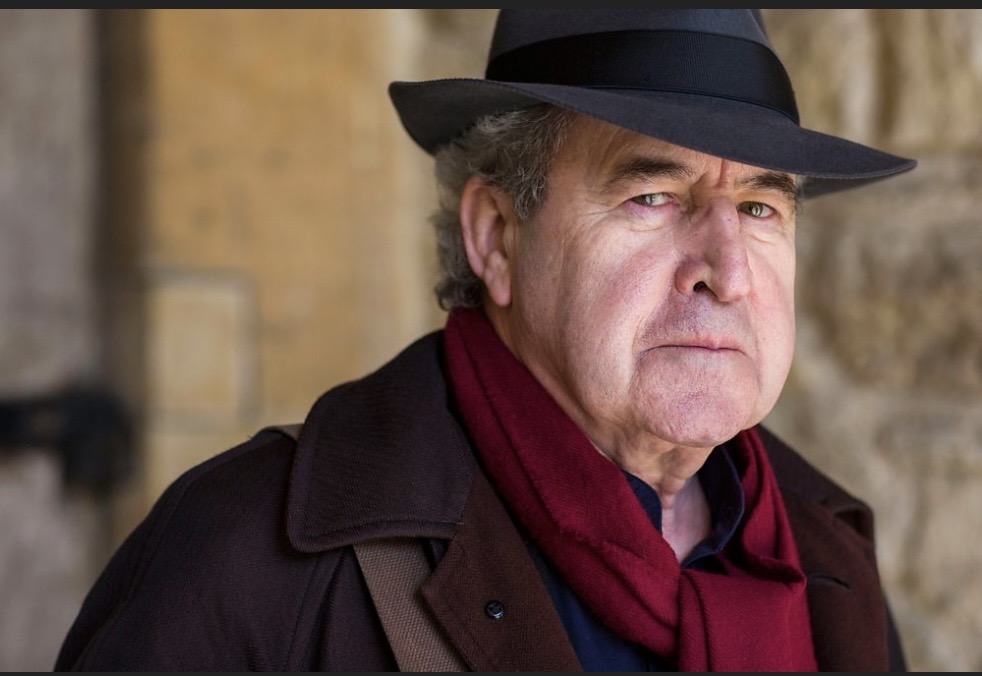
C’mon, John—don’t look so gloomy…
There's plenty of scenes featuring brooders, looking out the window, lost in thoughts. Like in this riff...
"She thought of her life, when she bothered to think about it, as something like a ramshackle caravan, with camels, and swaying wagons piled high with baggage, and music and drumming, and men in turbans riding on elephants, and wild animals in wheeled cages, and, oh, alle moglichen Dinge, a caravan that had emerged out of deep night into the sunlight and soft shadow of what, for now, was the present, and that one day, when she was old, would be all but forgotten past. She was not normally given to such ruminations. It must be, she decided, the effect of the south."
By the way, alle moglichen Dinge is German--it means all sorts of stuff.
I had to look it up. But I didn't mind looking it up. Cause it made me wonder--why would Banville use a German phrase at that moment? And then I realized it’s cause the character, lost in thought, is originally from Germany. Though she now lives in Ireland. And she speaks many languages, but her mind often returns to the language of her birth. And that sudden bit of German was the caravan emerging from the deep night of her past.
Looking up words and thinking about why Banville is writing what he’s writing takes time—at least a minute that might be spent reading. But I don’t mind. In that way, I was like a character in a Banville novel--lost in thought. With all the action hidden from view in my mind.
One last thing about Banville. It seems he’s read every novel or poem ever written. His novels—even the middlebrow ones—feature homages to writers like Hemingway and Eric Ambler and Graham Greene. Especially, Greene. Banville obviously can't get enough of Graham Greene.
I'm sure there were homages to other writers in April In Spain, but they flew over my head.
Well, anyway, enough brooding about Banville. Better get cracking on the next novel. When you start late with a writer so prolific and brilliant, it takes awhile to catch up.
The Aging Road


 RSS Feed