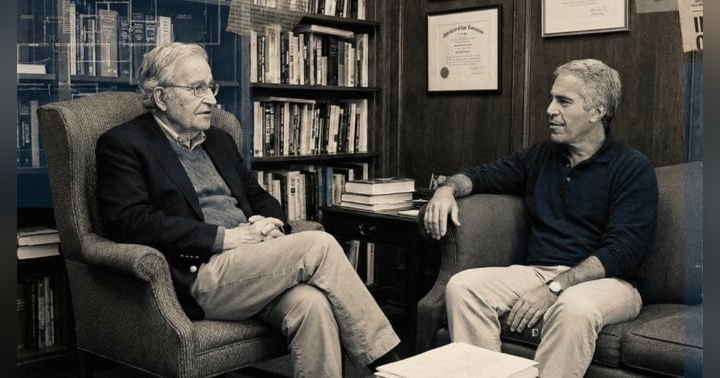
A Terrible Country
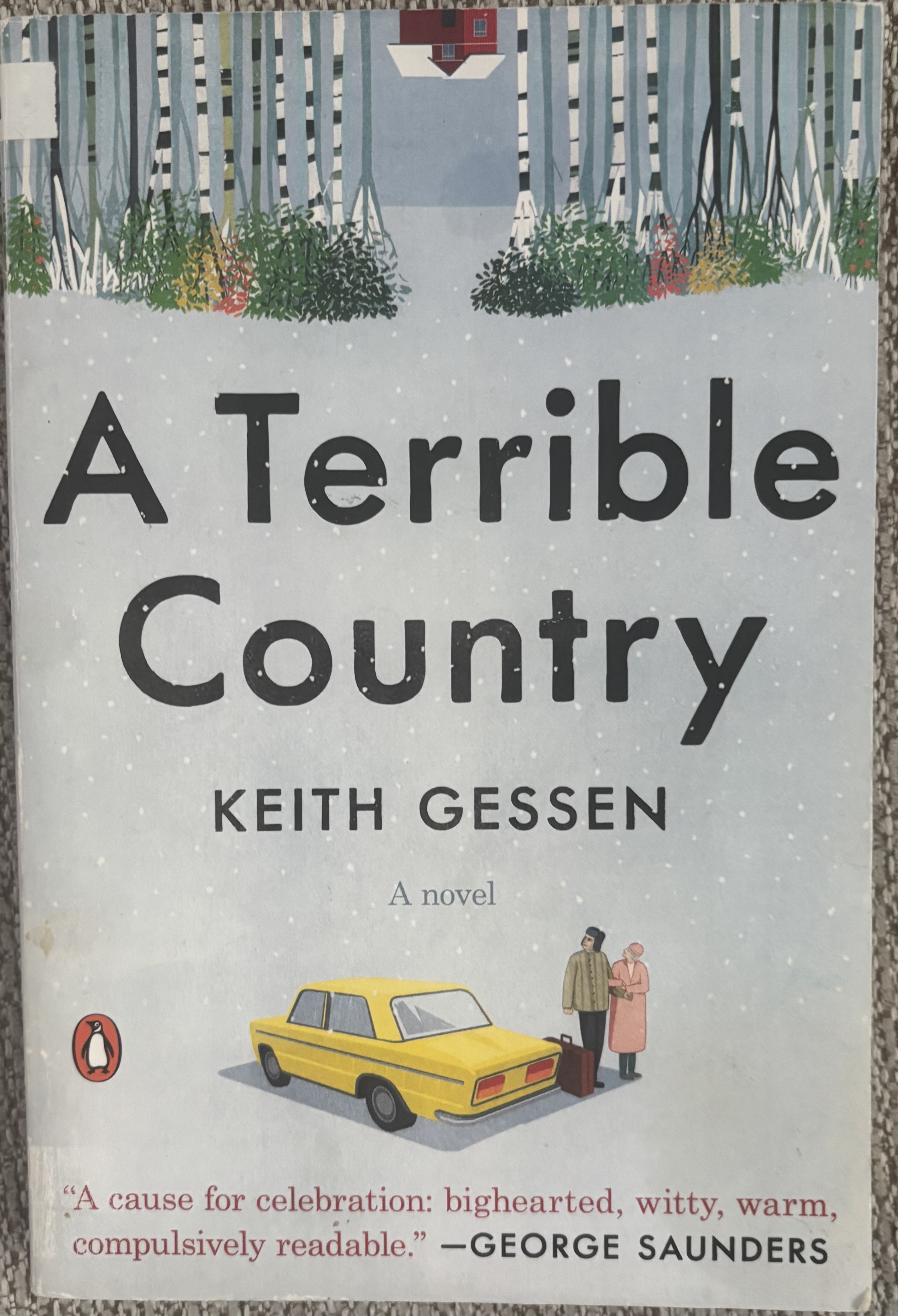
It’s sort of a miracle that I even checked A Terrible Country out of the library, much less read it.
It’s a sad book. A sweet and sad book, it’s true. With absurdly funny moments that made me laugh. Also true. And a “happy” ending—more or less.
But overall sad, no getting around it.
Generally, I stay away from sad books, movies or TV shows. On the grounds that real life is sad enough without adding to the misery. Probably my loss—as I’m undoubtedly missing out on a lot of fascinating material.
In the case of Keith Gessen’s novel, I'd have missed out on narrative masterpiece told by Andryusha (Andrei in English), a 33-year-old, down-on-his luck, adjunct college professor of Russian literature, who returns to his birthplace to...oh, let him explain.
In the late summer of 2008, I moved to Moscow to take care of my grandmother. She was about to turn ninety and I hadn’t seen her for nearly a decade. My brother Dima and I were her only family; her lone daughter, our mother, had died years earlier. Bab Seva lived alone now in her old Moscow apartment. When I called to tell her I was coming, she sounded very happy to hear it, and also a little confused.
As soon as I read that opening paragraph, I was hooked. It carries with it an edge of resignation, the self awareness of a man who knows his life was falling apart and there’s not much he can do about it so might as well return to the country his parents desperately escaped when he was a boy. Why not? It couldn’t get worse. Even though it can. And might. And did. Though you'll have to read the book to find out how.
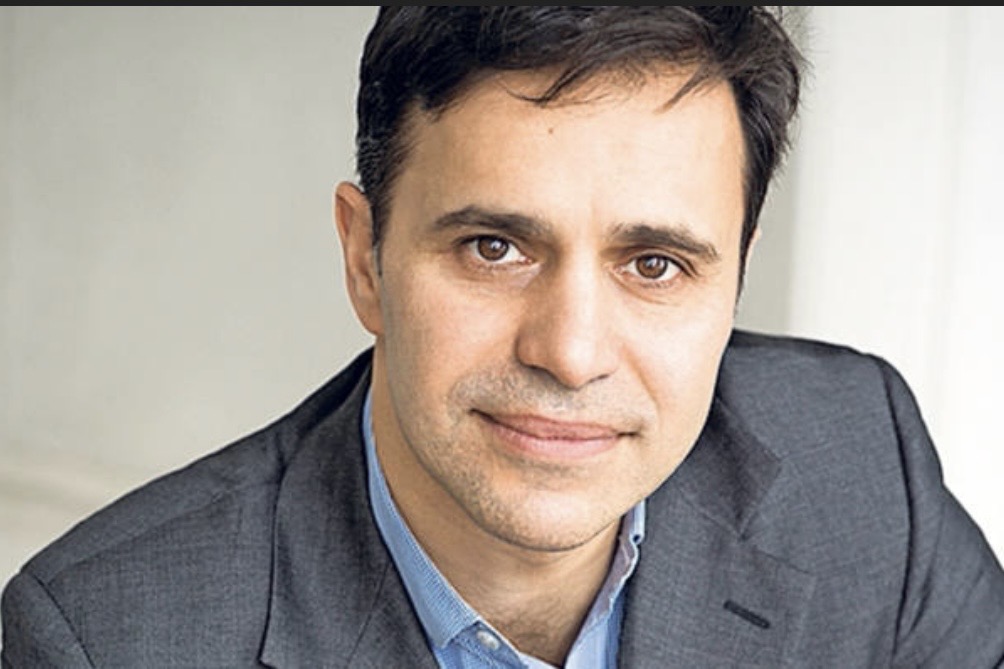
Keith Gessen—shoots & scores…
The terrible country is, of course, Russia, undergoing gangster-style gentrification, making a relative handful of people fabulously wealthy and everyone else unbearably desperate. There's not enough of anything for the vast majority of people who watch the rich and well-connected parade around town in their Mercedes limousines, flaunting their wealth, status and connections to the Putin regime.
It's a gangster state, sorta like Chicago under Mayors Daley and Rahm. Or the USA under Trump for that matter.
Andrei’s grandmother rails against her country almost every chance she gets, as well she should-having survived a host of horrors, including Stalin's purges.
Now she's confronting the loneliness and fragility of life as an old, largely forgotten and increasingly demented woman, hanging on as her friends die and her family moves away. Man, I'm getting sad just just thinking about it.
And yet shes also refreshingly resilient. One of my favorite moments is when she agrees to let Andrei throw her a birthday party. She thinks she’s 100 even though she’s “only” 90, as Andrei tries to remind her.
And so he accompanies her on a week’s worth of party preparation as they buy perishable foods like grapes which will either go rotten or get eaten before the party.
“And why not?” he declares. “you only turn ninety once. Especially if you think you’re turning one hundred.”
It’s an absurd, Yogi Berra-like observation that sorta makes sense if you think about it. Like so many other things in Russia.
I don’t want to give too much away, but…
The party turns out to be a success. Even though Baba Seva keeps forgetting who the party’s for. Sparking the following exchange…
Baba: Who’s party is this?
Everyone else: It’s your party!
Baba: It’s my party?
Everyone else: Yes.
Baba: All right.
It’s as though her dementia cleared up long enough for her to make fun of it—a triumph in and of itself and one well worth celebrating.
There’s much more than just life with Baba. Andrei discovers the joys of playing hockey in Russia. He falls in love. He has a run-in with the authorities. He…
Oh, just read the book. Sweetly sad though it may be.
Family Of Spies