A Friend Of Kafka
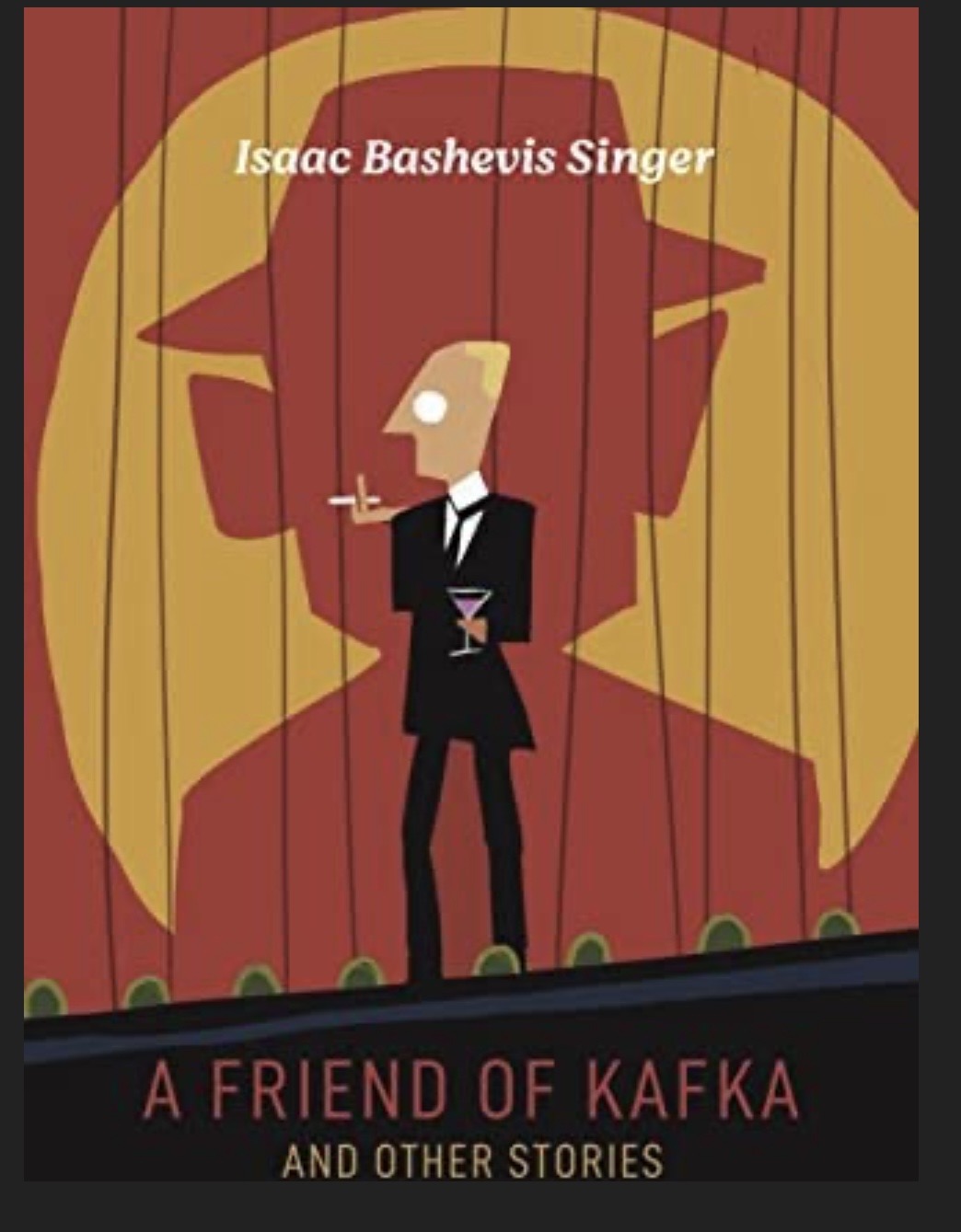
From time to time, I find myself compelled to read the stories of Isaac Bashevis Singer.
Or re-read, to be exact. As I'd read most of them by the time I was 30. Which was, as you might imagine, a long time ago.
Reading all those stories is no small feat cause Singer wrote a bunch of them. The man was a writing machine, churning them out in Yiddish, which got translated into English by various scholars often in collaboration with Singer.
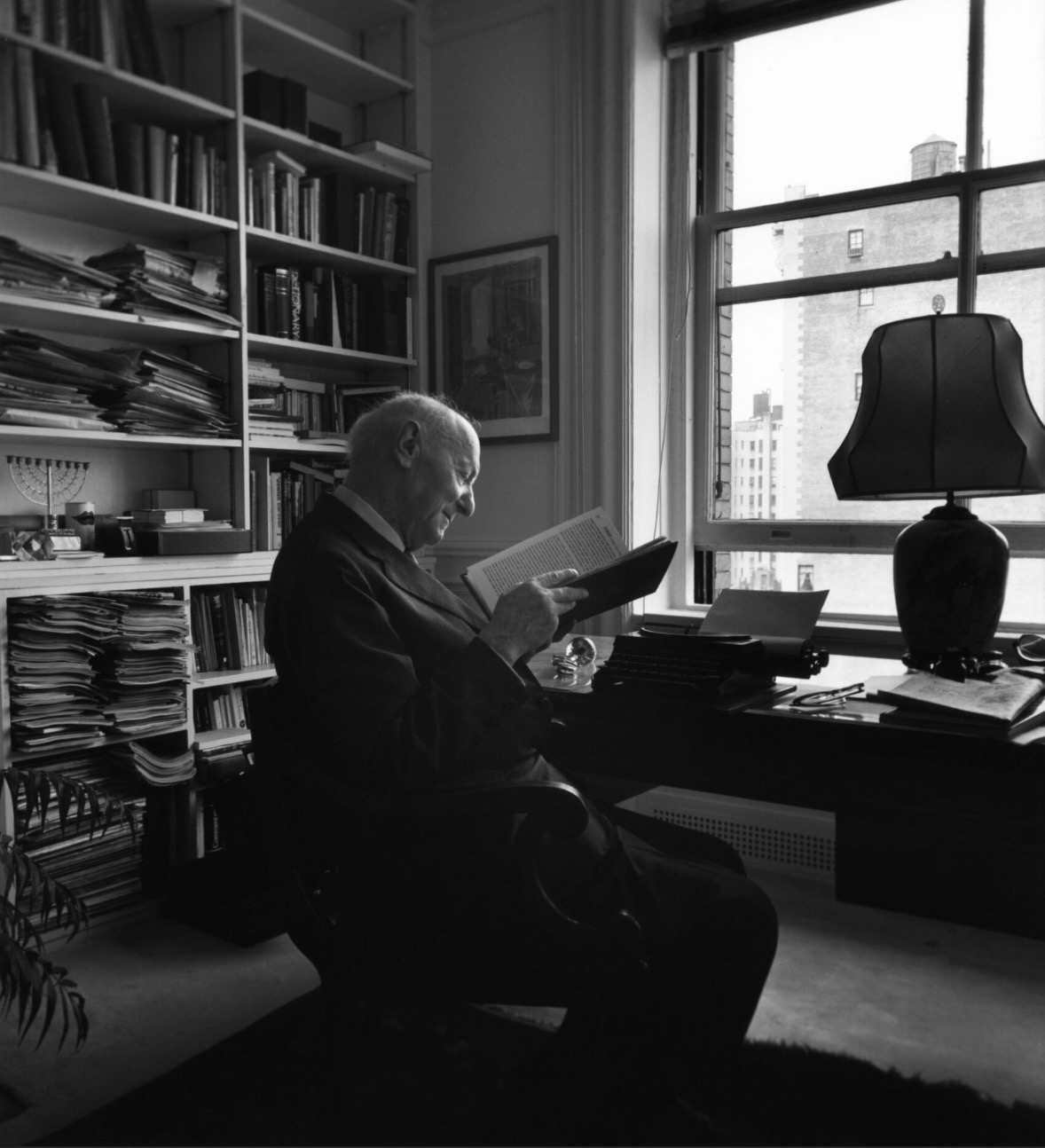
By the time I found my way to Singer’s stories, he was a relatively well-known author, living in the Upper West Side and giving interviews to reporters from the New York Times.
But he was actually born in Poland and came of age in a Jewish community in Warsaw, teeming with writers, actors, painters, philosophers and other great thinkers.
In 1935, at the age of 31, Singer escaped to New York City, from where he watched in horror as Hitler and his henchmen attempted to eradicate the people and the civilization he'd left behind.
And for the rest of his life--until he died in 1991--Singer did what he could to preserve that world in his books and stories.
Anyway, the other day I happened to re-read A Friend of Kafka, one of my favorite short stories by Singer.
The narrator is an unnamed writer, probably a stand-in for Singer. And the setting is Warsaw, just before the Nazi invasion—the storm has not yet erupted, but you can feel the dark clouds heading that way.
The narrator tells of a conversation he had one night at an artists' club with Jaques Kohn, an old, down-on-his-luck, actor, who used to be quite the star on the Yiddish-language stage. Or so he says.
Kohn is definitely the star of this story. An unabashed name dropper, self-promoter and hustler, he’s blessed with the gift of gab. He doesn't just talk--he riffs. The words ceaselessly pouring out. At first, you may think--oh, man, this dude's full of shit.
But, no, he always seems to have a point. And after a while, resistance is futile. You give up. It's mesmerizing. You follow his flow just to see where he's going as he alludes to anyone and everything--Zola, D'Annunzio, Otto Weininger, War and Peace, the Book of Job, Nimzowitsch. And Kafka. Of course, Kafka. The exalted Kafka. The very name speaks volumes. Who Kohn claims to have met, years ago when Kafka came to see him in a play.
Got that? He, Kohn, was the star. And Kafka was just some guy in the audience.
All of Kohn's chatter is a pretext to the moment when he gets around to mentioning what he really wants--to borrow a zolty or two so he can pay his rent or buy his next meal. Cause on top of all his other miseries--he's broke.
And despite it all, he's arrogant. He has a sharp word for just about everyone. For instance, when he first mentions a certain Madame Tschissik, he dismisses her as a "ham actress,” who Kafka fell madly in love with.
Oh, let's quote Kohn...
"When I think that Kafka loved this creature, dreamed about her, I am ashamed for man and his illusions. Well, immortality is not choosy. Anyone who happens to come in contact with a great man marches with him into immortality, often in clumsy boots."
Note how he started with a specific point--a narrow point--and used it to make a larger universal statement. Classic Kohn.
And then, a moment later, Kohn realizes Madame Tschissik happens to be in a nearby room, and he exclaims with joy...
"Guess who is in the other room? Madam Tschissik. Kafka's great love...Come, I'd like to introduce you to her."
God, what a character. First he mocks her. Then he can't wait to see her. You gotta love Kohm, though he's unsufferable. Out of curiosity, I looked him up--to see if he was for real. But no, he's not. Unlike Zola, D'Annunzio, Otto Weininger, Nimzowitsch, and Kafka, he's a figment of Singer's fertile imagination, probably a composite of people.
But Madame Tschissik? She was real. Born in Poland—lived most of her adult life in London. Died in 1976 at age 95. And, yes, Kafka apparently had a crush on her.
I love A Friend of Kafka for many reasons. In particular, I love that everyone in it has a reverence for Kafka. Even Singer. That's the whole point of chronicling Kohn. His significance is that here in the real flesh is a man who was friends with the Kafka.
And why shouldn’t they be in awe of Kafka? The man’s very name symbolizes genius.
I'd go so far as to say that Kafka is to writers what Coltrane is to jazz musicians. The great innovator, whose work is an unceasing source of inspiration to one generation of writers and musicians after the next. Many of whom are not Jewish, like Kafka, or Black, like Coltrane.
For me, reading Kafka is like listening to Coltrane. I do my best to follow and every now and then I comprehend what they're getting at in a really profound way.
And I think--Benny, ol' boy, you're a genius. Just like Kafka and Coltrane!
And then in the next instance--poof-my comprehension vanishes. And once again I'm humbled, vainly trying to figure out what the hell is going on.
I apologize for that divergence. Like Kohn, I got lost on a tangent. My point is...
It's a delight to me that a great genius like Singer feels the same way. About Kafka—not sure if he had any thoughts about Coltrane. No matter.
Reading Singer is a mystical experience. Like I'm also hanging with a friend of Kafka in a smoky club in Warsaw. In the last days before the storm erupts and obliterates so much.
But not everything. Cause so much of lives on in the stories of Isaac Bashevis Singer.
The Aging Road



 RSS Feed